
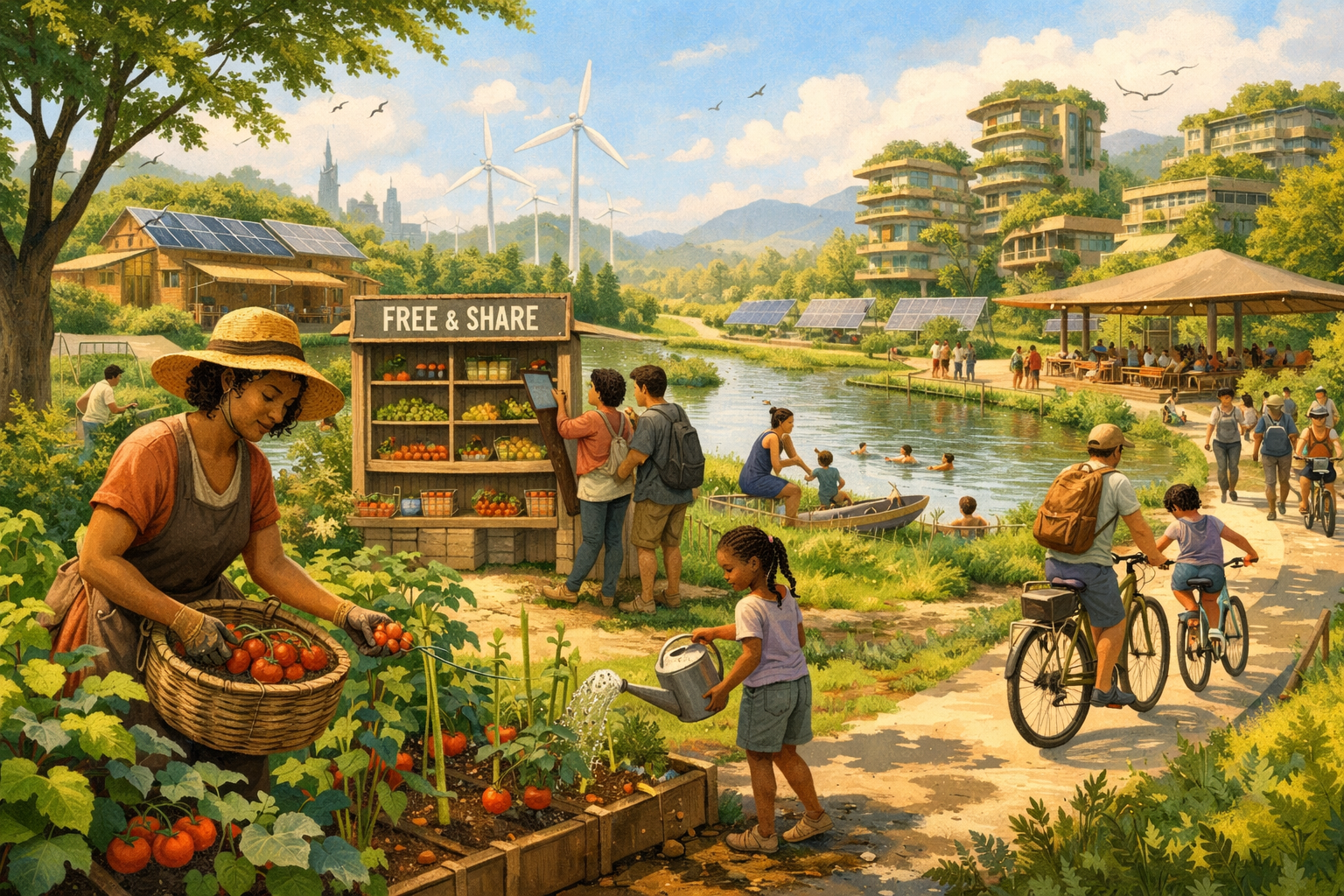
We inherit a world already in motion, soil turned by other hands, stories half-told, rivers that remember older paths. Yet the loudest voices often insist on taking more: more land, more profit, more space than any one life could possibly need. Scarcity, we’re told, justifies the grab.
But another tradition exists, quieter and older. It asks a different question:
What if we took only what we needed and left the rest for those who come after us?
This is not a philosophy of smallness. It is a philosophy of responsibility. It assumes the future has a claim on the present.
To take only what we need requires courage in a culture that celebrates excess. It means refusing the myth that accumulation equals success. It means noticing the ways power concentrates resources in some hands while others are told to make do with a lot less.
But restraint can be radical. Imagine economies built around sufficiency rather than endless growth. Cities designed for shared life instead of private hoarding. Knowledge passed forward instead of locked behind gates.
Taking only what we need is not about deprivation. It is about remembering that we are temporary guests here. The forests, the water, the fragile architectures of echo systems none of them belong to us.
So we move through the world with open hands.
We take what sustains us.
We protect what sustains others.
And we leave enough wonder, enough possibility, for the generations still on their way.