
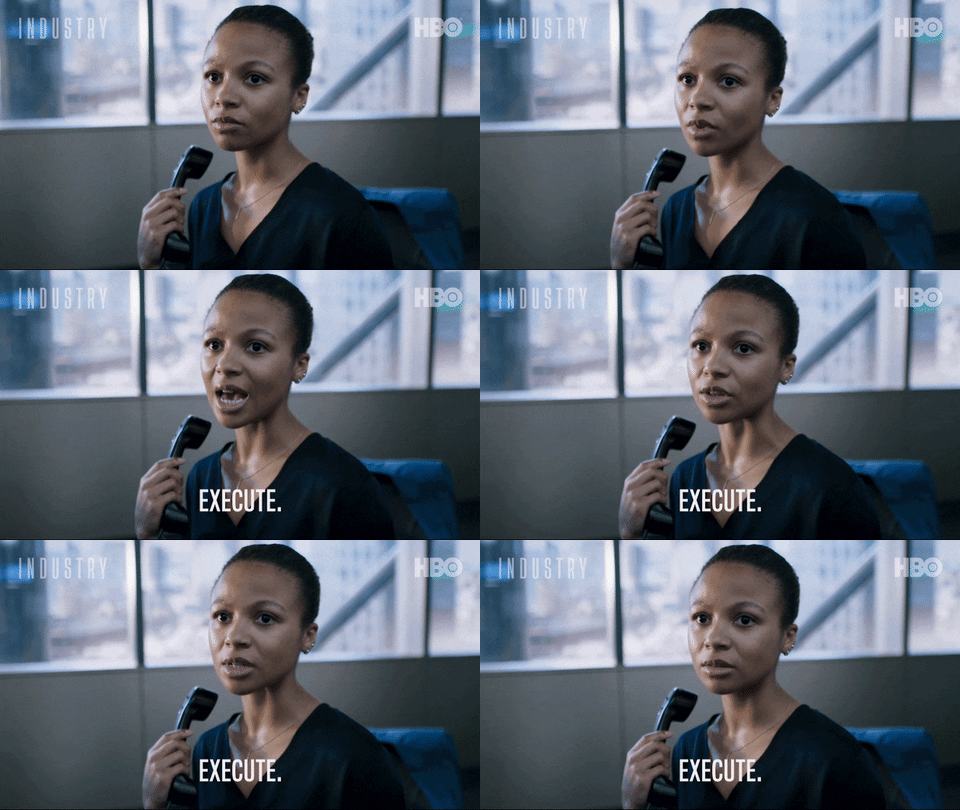
There’s a moment in Industry that keeps haunting me. Not a dramatic one, just someone’s face going blank between transactions. That split second when the performance drops and there’s nothing underneath. Just void.
This show understands something brutal about our current moment: we’ve become so good at performing ourselves that we’ve forgotten who we actually are. And the trading floor at Pier Point is just the most honest version of what we’re all doing.
The Performance Economy
Industry doesn’t moralize about ambition or capitalism. It just shows you what it costs. Watch any of the characters, the lies they tell, the people they become, the way they’ve learned to trade pieces of themselves for proximity to power that might never actually be theirs.
They’re all doing it. Manufacturing personas. Calculating every interaction. Turning sex into strategy and friendship into networking. They move through their lives like they’re watching themselves from outside, because they are. Constant self-surveillance has replaced actual selfhood.
And I can’t lie to you, it feels familiar.
The Authenticity of Emptiness
What makes the show devastating isn’t the financial corruption or the excess. It’s the emotional precision of disconnection. These people can’t even have a panic attack without calculating the optics. They can’t be vulnerable without weaponizing it. They’ve internalized the surveillance so completely that there’s no private self left to protect.
The darkness in Industry is authentic because it’s not dramatized. It’s just shown, flatly, as the normal state of being. This is what it takes to survive in systems designed to extract everything from you while giving back just enough to keep you hungry.
From a feminist perspective, this isn’t just about women trying to make it in male-dominated spaces. It’s about all of us—regardless of gender—learning to hollow ourselves out in exchange for value that’s always determined externally. We’ve all been taught to perform, to optimize, to turn ourselves into portfolios rather than people.
The Society We’ve Built
Industry reflects a world where connection to yourself is a luxury no one can afford. Where your worth is measured in productivity and performance. Where even your trauma gets monetized, your relationships become transactional, your authentic feelings are liabilities.
We don’t have time to know ourselves because we’re too busy optimizing ourselves. We don’t have space for genuine feeling because we’re managing how our feelings appear. The show just makes it visible, the trading floor as metaphor for contemporary existence.
These characters aren’t villains. They’re just people trying to survive in a system that demands constant performance and offers no room for the actual self. And they’re losing themselves in the process, piece by piece, until they can’t remember what they wanted before they learned what they were supposed to want.
The Question We’re Avoiding
Here’s what troubles me about the show, and about our moment: we’ve fought so hard for access to these spaces, these positions of power. And we’ve won some of those battles. But at what cost?
If the price of success is complete disconnection from yourself, if the price of mattering is becoming indistinguishable from the system that dehumanizes you, then what exactly have we won? Industry won’t answer that question because there is no easy answer.
Can you be authentic without being destroyed?
What the Darkness Shows Us
The most radical thing about Industry is that it refuses to offer solutions or hope. It just shows us the cost and says: this is what it takes. This is what we’re losing.
And we are losing something. All of us. In the way we’ve learned to curate ourselves for consumption. In the way we’ve turned self-improvement into self-erasure. In the way we’ve forgotten how to simply exist without performing existence.
The show is dark because the truth is dark. We are disconnected—from ourselves, from each other, from anything that can’t be quantified or optimized or traded.
We’ve built a society that values
performance over presence
image over interiority
productivity over personality
And sometimes the most honest thing to do is just name that. Not fix it. Not inspirationalize it. Just look directly at what we’ve become and sit with the discomfort of recognition.
Industry gives us that uncomfortable gift. It shows us people who’ve traded themselves away for something they’re not even sure they want. And in their blank faces between transactions, we see our own reflection. In the end a culture, whether at the workplace, societal or among friends, that withholds the structure of inequality is made up of the people living in it.
The question isn’t whether the show offers hope. The question is whether we’ll stop performing long enough to notice what we’ve missing out on.